A healthy smile is about much more than appearance—it plays an important role in chewing, speaking, and maintaining overall oral health. If you have a severely damaged tooth or a missing tooth, your dentist may recommend either a dental crown or a dental implant. While both treatments restore your smile, they serve different purposes and are suitable for different dental conditions.
Many patients searching for the best tooth replacement option often ask, “Should I get a dental crown or a dental implant?“ The answer depends on factors such as the condition of your natural tooth, bone health, budget, and long-term oral health goals.
If you’re looking for reliable dental treatment in Pitampura, Delhi, understanding the difference between these two options can help you make an informed decision.
Understanding Dental Crowns
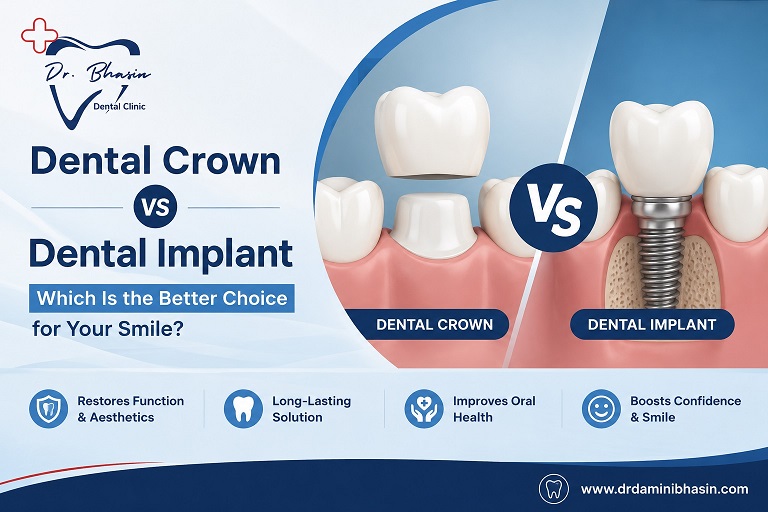
A dental crown is a custom-made cap that completely covers a damaged or weakened tooth. Its primary purpose is to restore the tooth’s strength, shape, size, and appearance while preserving the natural tooth underneath.
Dentists generally recommend crowns when:
- A tooth has undergone root canal treatment.
- A large cavity has weakened the tooth.
- A cracked or fractured tooth needs protection.
- A worn-down tooth requires restoration.
- Cosmetic improvement is desired.
Modern crowns are available in materials such as:
- Zirconia
- Porcelain
- Ceramic
- Porcelain-Fused-to-Metal (PFM)
- Metal crowns
Each material has its advantages depending on durability, aesthetics, and location of the tooth.
What Is a Dental Implant?
A dental implant is considered one of the most advanced solutions for replacing a missing tooth. Instead of covering an existing tooth, an implant replaces the missing tooth root using a titanium post placed inside the jawbone.
After the implant integrates with the bone, an abutment and a dental crown are attached, creating a natural-looking replacement tooth.
Dental implants are commonly recommended for:
- Single missing teeth
- Multiple missing teeth
- Complete tooth replacement
- Long-term smile restoration
Since implants replace both the root and the visible portion of the tooth, they help preserve jawbone health and facial structure.
Dental Crown vs Dental Implant: Key Differences
|
Feature |
Dental Crown |
Dental Implant |
|
Purpose |
Protects an existing tooth |
Replaces a missing tooth |
|
Tooth Root |
Natural root remains |
Artificial titanium root |
|
Surgery Required |
No |
Yes |
|
Treatment Duration |
Usually 1–2 weeks |
3–6 months |
|
Bone Preservation |
No |
Yes |
|
Longevity |
10–15 years (or more with care) |
20+ years, often lifelong |
|
Cost |
Lower initial cost |
Higher initial investment |
|
Appearance |
Natural-looking |
Looks and functions like a natural tooth |
When Is a Dental Crown the Better Option?
A crown is ideal when your natural tooth can still be saved. Saving a healthy tooth is always the preferred approach whenever possible.
A dental crown may be the right choice if:
- Your tooth root is healthy.
- You have a cracked or chipped tooth.
- A large filling has weakened the tooth.
- You recently had root canal treatment.
- The tooth structure is still sufficient for support.
By preserving the natural tooth, a crown restores function while preventing further damage.
When Is a Dental Implant the Better Option?
A dental implant is recommended when the natural tooth cannot be saved or has already been lost.
You may be a suitable candidate if:
- Your tooth is completely missing.
- The tooth has severe decay beyond repair.
- There is extensive infection around the tooth.
- Previous dental treatments have failed.
- You want a permanent replacement solution.
Because implants stimulate the jawbone, they also help prevent bone loss that typically occurs after tooth loss.
Which Option Lasts Longer?
One of the biggest differences between crowns and implants is durability.
A well-maintained dental crown typically lasts between 10–15 years, although many last longer with excellent oral hygiene.
Dental implants, however, can last 20 years or even a lifetime with proper care and regular dental check-ups.
This makes implants a valuable long-term investment despite the higher initial treatment cost.
Appearance: Which Looks More Natural?
Both dental crowns and implants are designed to blend naturally with your smile.
Modern ceramic and zirconia crowns closely match the color and translucency of natural teeth.
Dental implants go one step further because they replace both the tooth root and crown, providing excellent stability and a highly natural appearance.
For many patients, it is difficult to distinguish an implant-supported crown from a real tooth.
Cost Comparison
Cost is often a deciding factor.
Dental crowns generally have a lower upfront cost because they restore an existing tooth.
Dental implants involve surgical placement, advanced planning, and multiple treatment stages, making them more expensive initially.
However, considering their longevity and ability to preserve jawbone health, implants often provide greater value over time.
The right option should always be based on your oral health needs rather than price alone.
Recovery Time
Dental crowns usually require:
- Tooth preparation
- Digital impressions
- Crown placement
Most patients complete treatment within one or two visits.
Dental implants require:
- Implant surgery
- Healing period (osseointegration)
- Placement of the final crown
Although the process takes longer, the result is a stable and long-lasting tooth replacement.
How Your Dentist Decides the Best Treatment
Your dentist will evaluate several factors before recommending the most suitable option, including:
- Condition of the natural tooth
- Jawbone density
- Gum health
- Number of missing teeth
- Overall oral hygiene
- Medical history
- Long-term expectations
A comprehensive clinical examination and digital dental X-rays help determine the ideal treatment plan for each patient.
Why Timely Treatment Matters
Ignoring a damaged or missing tooth can lead to several complications, including:
- Shifting of adjacent teeth
- Difficulty chewing food
- Jawbone deterioration
- Bite problems
- Speech difficulties
- Increased risk of further dental damage
Seeking treatment early often results in simpler procedures and better long-term outcomes.
Looking for the Right Dental Solution in Pitampura?
If you’re unsure whether a dental crown or a dental implant is the better choice, consulting an experienced dentist is the best way to receive personalized guidance.
At Dr. Bhasin Dental Clinic, patients receive comprehensive dental evaluations using modern diagnostic technology to determine the most suitable treatment for their oral health needs. Whether your goal is saving a damaged tooth with a high-quality crown or replacing a missing tooth with a durable dental implant, the treatment plan is tailored to your individual requirements.
Conveniently located in Pitampura, Delhi, the clinic focuses on patient comfort, advanced dental techniques, and long-lasting results. Every procedure is performed with an emphasis on preserving oral health, restoring confidence, and ensuring a natural-looking smile.
Why Patients in Pitampura Choose Dr. Bhasin Dental Clinic
Patients trust the clinic for:
- Experienced and patient-focused dental care
- Advanced digital diagnostic technology
- High-quality crowns and implant solutions
- Personalized treatment planning
- Comfortable and hygienic environment
- Transparent consultation and guidance
- Convenient location in Pitampura, Delhi
Whether you need a simple dental restoration or a complete smile rehabilitation, expert guidance can help you choose the treatment that’s right for you.