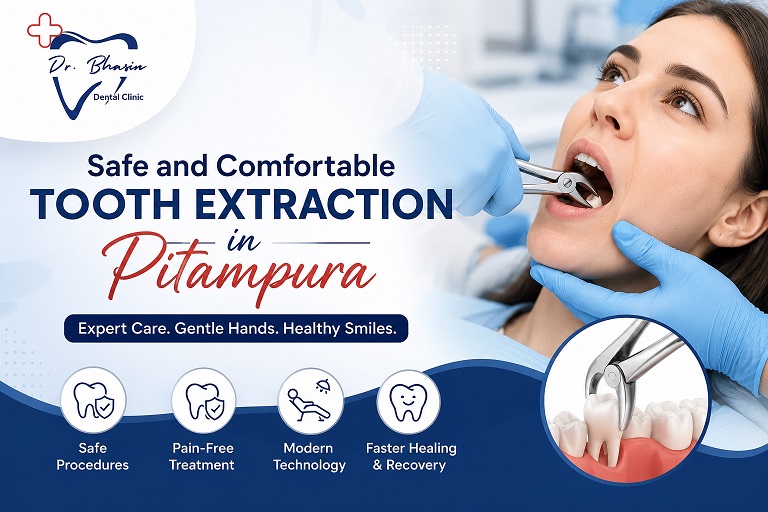
Tooth pain has a way of disrupting everything — eating becomes uncomfortable, sleeping becomes difficult, and even simple conversations can become painful. While preserving natural teeth is always the first priority in dentistry, there are situations where removing a tooth becomes the best solution to protect your overall oral health.
Whether you are dealing with severe tooth decay, an infected wisdom tooth, overcrowding, or a damaged tooth that cannot be restored, timely treatment can prevent complications and help you return to normal life faster.
If you are searching for a reliable dental clinic for tooth extraction in Pitampura, Shakurpur, or nearby areas of North West Delhi, understanding the procedure and knowing what to expect can make the process much less stressful.
When is Tooth Extraction Necessary?
Modern dentistry focuses on saving teeth whenever possible, but some situations require extraction for long-term oral health benefits.
Common reasons for tooth extraction include:
- Severe tooth decay that cannot be treated with fillings or root canal treatment.
- Advanced gum disease causing tooth mobility.
- Impacted wisdom teeth causing pain or swelling.
- Broken teeth that cannot be repaired with crowns or restorations.
- Orthodontic treatment requiring space creation.
- Dental infections that have damaged the tooth structure extensively.
- Trauma or accidental injury resulting in irreparable damage.
Ignoring these conditions can lead to worsening pain, infection spread, jawbone issues, and damage to neighboring teeth.
Signs You May Need a Tooth Extraction
Many patients delay visiting a dentist because they hope the pain will disappear on its own. Unfortunately, untreated dental problems often become more serious over time.
You should consult a dentist immediately if you experience:
- Persistent toothache lasting several days.
- Swelling around the gums or jaw.
- Difficulty chewing food.
- Sensitivity to hot or cold temperatures.
- Bad breath caused by infection.
- Pus discharge near the affected tooth.
- Swollen lymph nodes around the neck.
- Difficulty opening your mouth fully.
Early diagnosis can sometimes save the tooth and prevent extraction altogether.
Types of Tooth Extraction Procedures
Not all tooth extractions are the same. The treatment approach depends on the condition and position of the tooth.
1. Simple Tooth Extraction
A simple extraction is performed when the tooth is visible above the gum line and can be removed using specialized dental instruments.
This procedure is usually completed quickly under local anesthesia and involves minimal discomfort.
Common examples include:
- Severely decayed teeth
- Loose teeth due to gum disease
- Teeth requiring removal before braces treatment
2. Surgical Tooth Extraction
Surgical extraction is required when a tooth is partially erupted, broken below the gum line, or impacted.
This procedure is commonly used for:
- Wisdom teeth removal
- Broken teeth
- Impacted molars
- Complex root structures
Advanced techniques and modern equipment ensure the procedure remains safe and comfortable.
Are Tooth Extractions Painful?
One of the biggest concerns patients have is pain during treatment.
The reality is that modern dentistry has made tooth extraction significantly more comfortable than many people expect.
Local anesthesia completely numbs the treatment area before the procedure begins. Patients generally feel pressure during extraction rather than pain.
For anxious patients, additional comfort options may also be available depending on the complexity of the procedure.
Most discomfort occurs after the anesthesia wears off, and this can usually be managed with medications and post-treatment instructions provided by your dentist.
What Happens During the Procedure?
Understanding the process often helps reduce anxiety.
A typical tooth extraction appointment involves:
- Detailed examination and digital imaging.
- Discussion of treatment options.
- Administration of local anesthesia.
- Gentle removal of the affected tooth.
- Cleaning and preparation of the extraction site.
- Placement of stitches if necessary.
- Post-treatment instructions and medication guidance.
Many simple extractions can be completed in less than an hour.
Recovery After Tooth Extraction
Recovery time depends on the complexity of the extraction, but most patients return to routine activities within a day or two.
To promote faster healing:
- Bite gently on the gauze pad provided by your dentist.
- Avoid smoking for at least 48 hours.
- Do not use straws during the healing period.
- Avoid hot foods immediately after treatment.
- Eat soft foods such as yogurt, khichdi, soup, and mashed potatoes.
- Maintain oral hygiene carefully around the extraction site.
- Avoid strenuous exercise for the first 24 hours.
Following these instructions helps reduce the risk of complications such as dry socket.
What is Dry Socket?
Dry socket is one of the most common complications after tooth extraction.
Normally, a blood clot forms in the extraction area to protect the underlying bone and nerves. If this clot becomes dislodged too early, severe pain may develop.
Symptoms include:
- Intense pain several days after extraction.
- Bad taste in the mouth.
- Visible bone inside the socket.
- Bad breath.
Fortunately, following your dentist’s aftercare instructions significantly reduces this risk.
Wisdom Tooth Extraction: When Should You Consider It?
Wisdom teeth often erupt between the ages of 17 and 25 and frequently create problems due to lack of space.
Common symptoms include:
- Jaw pain.
- Swelling near the back teeth.
- Difficulty chewing.
- Repeated gum infections.
- Pressure on neighboring teeth.
Timely wisdom tooth removal can prevent future complications and preserve adjacent teeth.
Benefits of Timely Tooth Removal
Although many people fear extractions, delaying treatment usually creates bigger problems.
Removing a problematic tooth can:
- Eliminate persistent pain.
- Prevent infection spread.
- Protect surrounding teeth.
- Improve chewing comfort.
- Prepare for future restorative treatments.
- Improve overall oral health.
Prompt treatment often results in a simpler procedure and quicker recovery.
Replacing Missing Teeth After Extraction
Extraction does not always mean living with a missing tooth permanently.
Modern dentistry offers several replacement options:
Dental Implants
A long-lasting and natural-looking solution that replaces both the tooth root and crown.
Dental Bridges
An excellent option for replacing one or more missing teeth.
Dentures
Suitable for multiple missing teeth and full-mouth rehabilitation cases.
Discussing replacement options early helps preserve jawbone health and maintain facial structure.
Choosing the Right Clinic for Tooth Extraction
When selecting a dental clinic, patients should look beyond pricing alone.
Consider factors such as:
- Experienced dental professionals.
- Modern equipment and digital imaging.
- Sterilization protocols.
- Emergency appointment availability.
- Patient comfort measures.
- Transparent treatment planning.
Choosing an experienced team often leads to safer treatment and faster recovery.
Tooth Extraction in Pitampura and Nearby Areas
Residents of Pitampura, Shakurpur, Saraswati Vihar, Kohat Enclave, and nearby areas often look for a trusted dental clinic that combines experience with patient comfort.
Timely treatment can prevent dental emergencies and help patients avoid unnecessary pain and complications.
Whether it is a severely damaged tooth, infected molar, or wisdom tooth problem, consulting a qualified dentist at the earliest stage can make treatment easier and recovery faster.
Frequently Asked Questions